

In an era defined by rapid digital transformation, governments and organizations around the world are increasingly adopting digital solutions to enhance efficiency and connectivity. However, this shift toward digitalization has also opened new avenues for cyber threats – with phishing scams emerging as one of the most pervasive risks targeting businesses today.
What is phishing?
Phishing is a form of cyberattack in which criminals impersonate trusted entities — such as companies, service providers, or financial institutions — to deceive individuals into revealing sensitive information like login credentials or financial details. These attacks typically occur through deceptive emails, messages, or counterfeit websites designed to appear legitimate. By exploiting social engineering techniques, attackers manipulate users into taking actions that compromise their security.
In today’s interconnected digital landscape, phishing email scams pose a serious and growing threat to organizations of all sizes.
According to a recent CNA report, the number of phishing incidents surged in 2023 compared to the previous year, highlighting an urgent need for greater awareness, education, and proactive defense measures to mitigate this evolving risk.
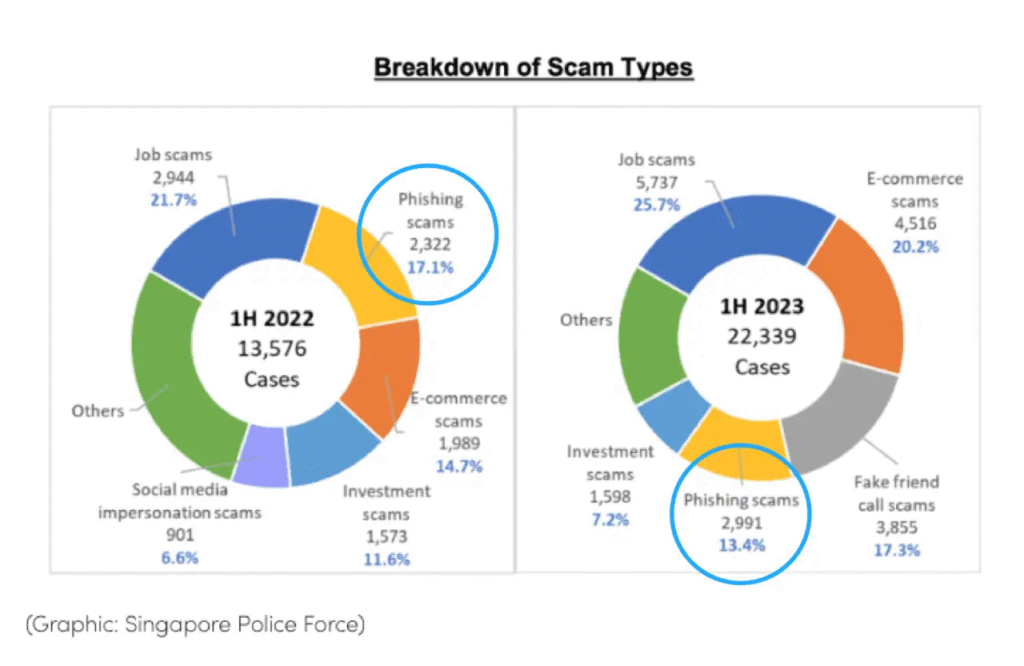
Above illustration source from: CNA
Effective Strategies to Avoid Phishing Emails
1. Verify the Sender’s Identity
Always take a moment to confirm who the email is really from. Phishing emails often come from addresses that look legitimate but contain subtle alterations.
For example, instead of “[email protected]”, a scammer might use “[email protected]” (note the “1” replacing the “l”).
Stay alert and double-check sender details before responding or taking action.
2. Think Before You Click
Be cautious with links and attachments. Hover your cursor over a link to preview its actual destination — if it looks unfamiliar or suspicious, don’t click it.
When in doubt, contact the sender through another trusted channel (such as a phone call or verified email) to confirm authenticity.
3. Review Email Content Carefully
Watch for inconsistencies in tone, grammar, and formatting. Phishing emails often include spelling errors, awkward phrasing, or off-brand visuals that can signal a scam.
Also, remember that reputable organizations rarely send unsolicited attachments. Always verify the source before downloading or opening any files.
4. Be Wary of Requests for Sensitive Information
Treat any email asking for passwords, account details, or personal information with skepticism. Legitimate businesses and financial institutions do not request such details via email.
5. Enable Two-Factor Authentication (2FA)
Add an extra layer of protection to your accounts by enabling 2FA wherever possible. Even if a password is compromised, 2FA significantly reduces the risk of unauthorized access.
6. Report Suspicious Emails Immediately
If you spot an email that seems suspicious, report it to your IT or security team right away. Quick reporting allows them to investigate, block threats, and protect your organization’s systems and data from potential compromise.
7. Use Email Filtering and Security Tools
Strengthen your defenses with email filtering and security solutions. These tools automatically detect and block many phishing attempts before they reach your inbox.
If your organization hasn’t yet implemented such tools, consult your IT team about deploying them — proactive prevention is one of the best defenses against phishing.
As we continue to operate in an increasingly digital world, phishing emails remain one of the most persistent and evolving cyber threats. Attackers are becoming more sophisticated — even leveraging AI-driven tactics — to exploit vulnerabilities and deceive individuals and organizations. Falling victim to such scams can lead to severe consequences, from financial losses to reputational and legal damage.
To stay protected, it’s essential to remain vigilant and proactive. By practicing caution in our online interactions and ensuring our digital “doors” are always locked, we can significantly reduce the risk of compromise.
If you ever encounter a suspicious email or attachment, report it immediately to your IT support team — swift action can make a critical difference in preventing potential harm and securing your organization’s data.
Cybersecurity is everyone’s responsibility. As we embrace the benefits of digital transformation, let’s continue to prioritize safety and awareness to keep our online presence secure and resilient.
If you’re dealing with persistent spam or uncertain about your email security setup, reach out to us at [email protected] — our team will help you strengthen your defenses and keep your communications protected.